
Lakewood Resident Lookup Scope
A single name does not unlock one master Lakewood resident list. The useful record depends on the fact being tested. The Assessor can connect an address to a parcel and owner context. RR/CC can show a named party to a recorded instrument. A court docket can show a case role and event. A vital record can confirm an event and relationship subject to eligibility. A business or professional file can establish an affiliation, while probate can identify heirs in a public filing.
| Record | What it can confirm | Where | Access |
|---|---|---|---|
| Assessment parcel | Owner context, situs, AIN, structure facts | LA County Assessor | Free address or map portal |
| Recorded instrument | Party name, role, date, legal or property link | LA County RR/CC | Offline index or written paid request |
| Court docket | Case number, parties, events, courthouse, disposition | Los Angeles Superior Court | Case number free; name routes may charge |
| Vital record | Birth, death, marriage, or dissolution event | RR/CC and CDPH | Informational or authorized route |
| Voter status | One person’s registration status | LA County elections | Self-check; no casual browse |
| Business filing | Entity status, agent or filed role, address context | California SOS | Basic search free |
| Professional license | License identity, status, issue or discipline link | DCA and boards | Free search |
| Probate file | Decedent, petitioner, fiduciary, heirs in public filings | Los Angeles Superior Court | Case access, counter, or clerk copy |
| Unclaimed property | Name and reported property or last-known geography | California Controller | Free search; not residence proof |
Use the Assessor Portal for an address, the court for a case, the RR/CC or CDPH for a vital event, and the appropriate history shelf for a past resident. That division keeps a Lakewood resident lookup specific instead of overreading one result.
Lakewood Lookup Identity Anchors
Two independent anchors are the core safeguard against a same-name error. Useful pairs include full name plus address or AIN, middle initial plus approximate age or event date, spouse or relative plus a known street, license number plus board, or entity role plus a dated filing. Search maiden, married, hyphenated, compound, and initial forms. OCR can confuse I and l or rn and m, while a trust or corporation can hide the household name from a deed result.
Record the source and the question it answers. A court docket is a procedural record, not a finding that every allegation is true. A professional address is an affiliation, not a home. A directory entry is a time-limited listing. A mailing address can belong to a trustee or agent. When a match cannot be supported by a second stable fact, leave it unresolved.
- Write the name as it appears, then add spelling and surname variants.
- Choose one stable anchor: address, AIN, event date, relative, case role, entity, or license.
- Search the record type that can actually contain that anchor.
- Compare dates, geography, party role, and legal description before joining records.
- Keep an unresolved result separate from a confirmed identity.
Note: A matching name and city is a lead, while a matching name, parcel, date, and role is a stronger research result.
For a Lakewood resident lookup, preserve those anchors in the research log instead of relying on a name that merely looks familiar.
Lakewood Court Lookup by Name
Lakewood has no separate municipal court. Los Angeles Superior Court handles civil, small claims, family, probate, criminal, juvenile, and traffic matters through filing locations set by case type and ZIP. The main LASC Find a Case page provides case-number access, future calendars, selected document images, and links to paid party-name or defendant-name searches. Guest users can purchase without a standing account.
A case number is the cleanest route. A civil, small-claims, family-law, or probate party-name search is separate from the criminal defendant-name search. Selected civil and small-claims images may be purchased online. Criminal and family-law images are not available online, so a public courthouse terminal, counter request, or clerk copy request becomes the fallback. Name-search results remain available for two hours after purchase, while purchased documents remain available for 30 days.
| Enter your case number | Required for free case-summary access |
|---|---|
| Filing courthouse | Optional in limited-jurisdiction paths; preserve the location |
| Party-name search | Paid civil, small claims, family law, and probate route |
| Defendant-name search | Separate paid criminal route |
| Calendar | Case number action for future hearings |
| Document images | Account or guest purchase for selected civil and small-claims files |
The court guest information page explains service categories and retention windows. A docket result may show case number, courthouse, filing date, party role, counsel, events, judicial officer, register entries, and disposition. Juvenile, adoption, sealed, confidential, and protected victim material can be excluded.
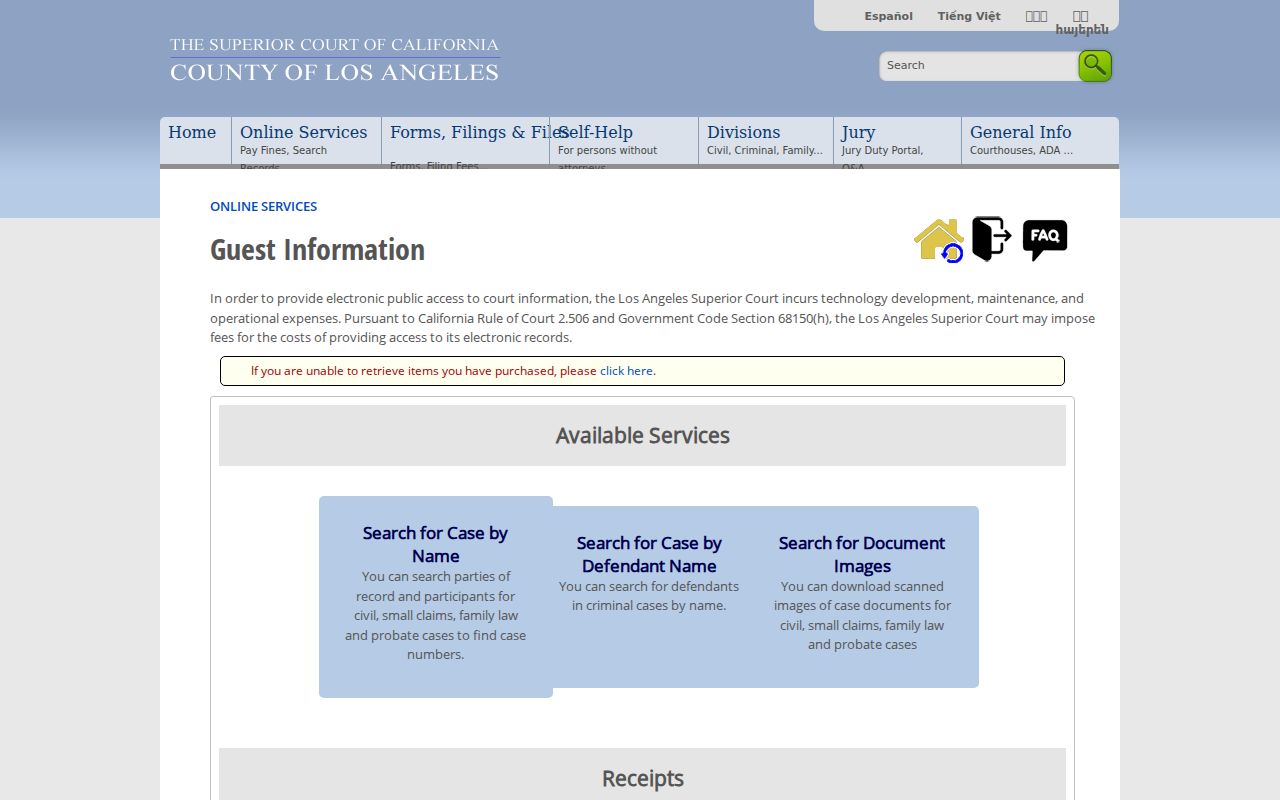
The court search choices shown in the image make clear why a name-only Lakewood resident lookup must choose the right case category before reading a result.
Lakewood Vital Lookup Routes
California does not use a simple age rule that opens every birth or death record to genealogy. Los Angeles County RR/CC maintains county birth, death, and marriage records, while CDPH Vital Records maintains statewide birth, death, fetal death or stillbirth, marriage, and divorce certificates. The county’s birth route states coverage since 1866 on one request page, while another county viewing page says 1877. Preserve that source discrepancy rather than presenting one unqualified start year.
An authorized certified birth or death copy requires a qualifying relationship or role, a sworn statement, and notarization when mailed unless an exception applies. An informational certified copy is available for many public birth or death records but is marked not valid to establish identity. Confidential marriage records are limited to spouses or a court-authorized route under Family Code §511. A divorce certificate is a limited vital-statistics record; pleadings, orders, and judgments remain court files.
The county online birth request uses VitalChek. County mail and in-person alternatives remain available. The research notes a $34 county birth request, a 20-business-day processing target, and a nonrefundable No Record Statement after a failed search. CDPH’s 2026 fees are $31 birth, $26 death, $19 marriage, and $18 dissolution certificate; confirm the current schedule on the CDPH vital-record fees page. State mail payments use a U.S.-bank check or money order payable to CDPH Vital Records.
The LA County birth-record request route shows the county’s application and eligibility path.
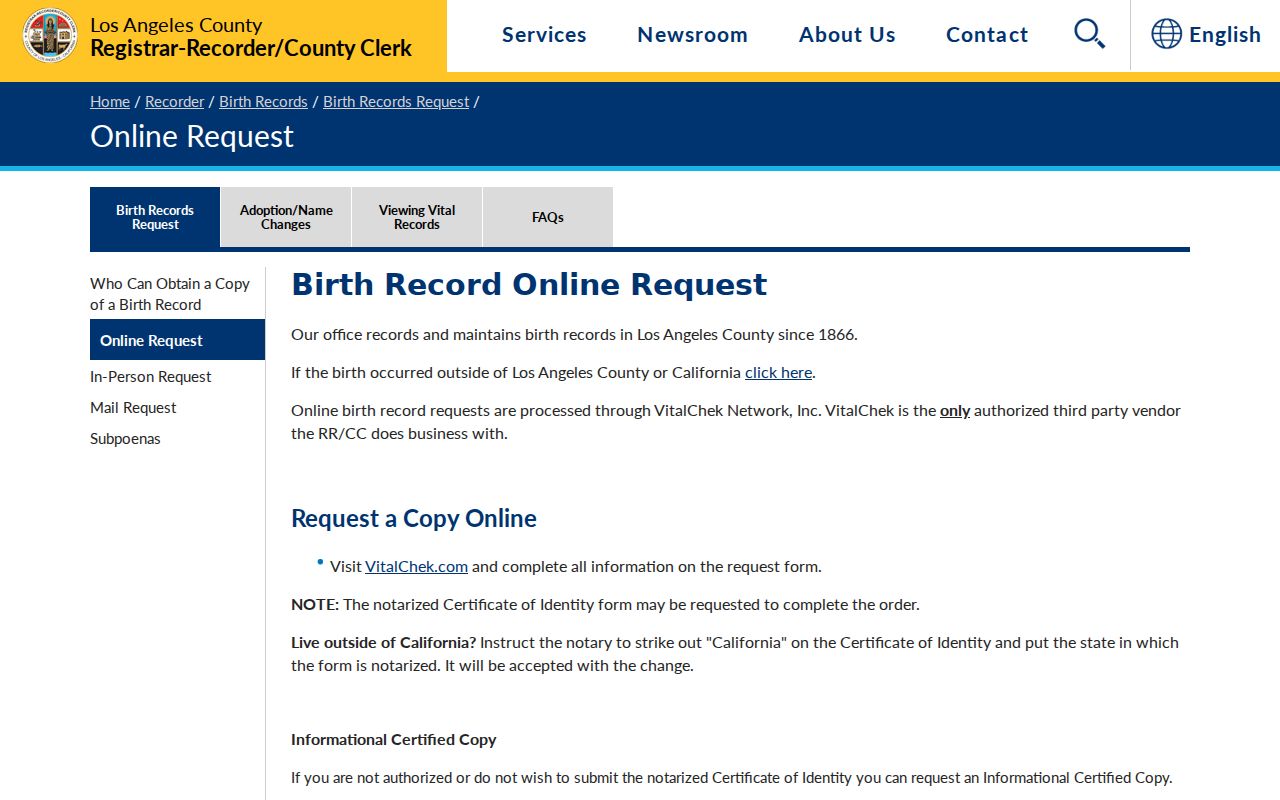
The county request route shows why the applicant’s relationship and identity details matter as much as the person’s name.
Lakewood Voter Lookup Check
The LA County voter tool is a self-verification form. It requires last name, birthdate, house number, and ZIP Code, then returns registration and election-service information for the entered voter. It does not list everyone at a Lakewood address. The four-field design is a privacy boundary, not a missing search feature.
California voter files are available only for approved election, scholarly, journalistic, political, or governmental uses. An application identifies the requester, organization or authorizer, geography, status, purpose, and security controls. A specific-person request can require full name, date of birth, county, and residence address for up to ten people. Statewide and specific-record fees are stated in the research, while county fulfillment can differ.
Approved fields may include name, date of birth, registration date, residence and mailing addresses, precinct, contact information, party preference, status, participation date and method, and district links. They do not include driver-license or ID numbers, partial Social Security numbers, unique identifiers, or signature images under Elections Code §2194(b). Participation never reveals ballot choice. The Secretary of State voter-file request route explains the qualified-use application.
The LA County voter status form is the correct public route for a person checking their own registration.
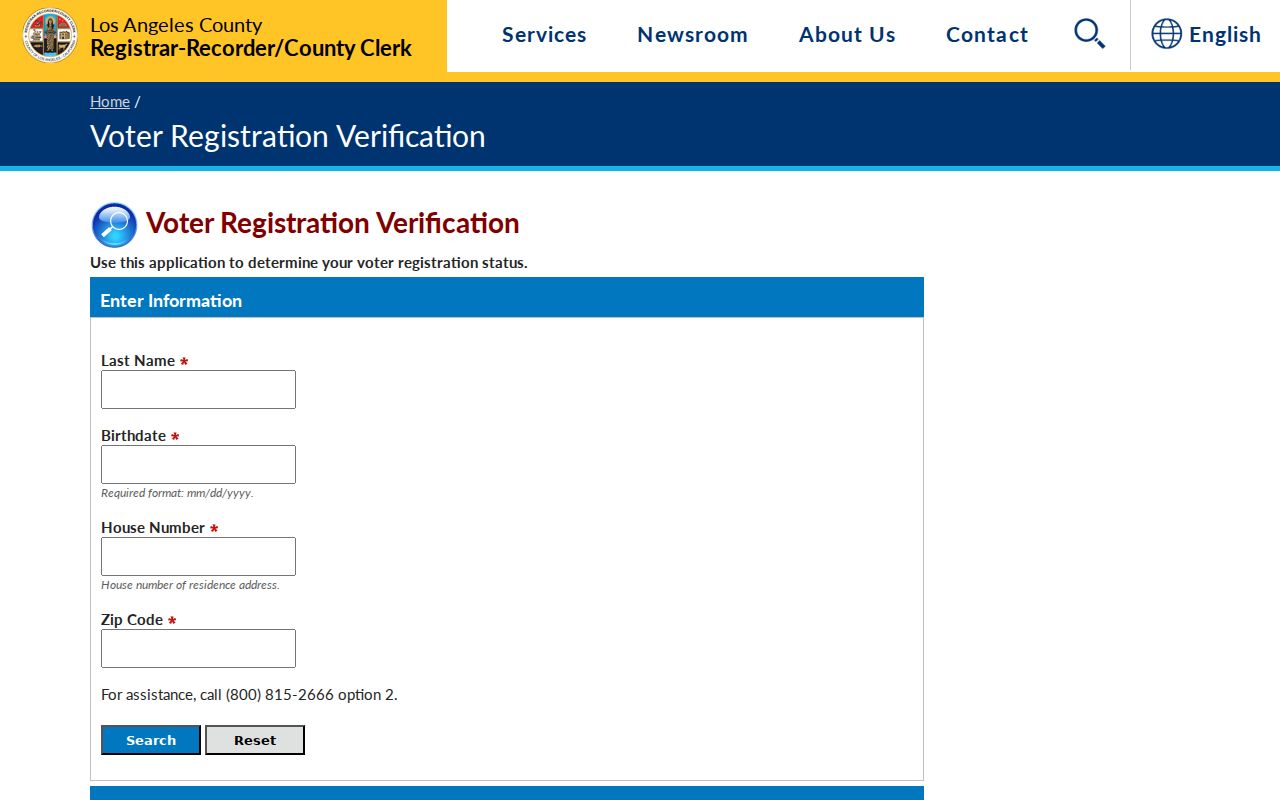
The four required fields visible in the county status route keep a self-check distinct from a public resident lookup.
Note: Registration shows an election record, not continuous presence at a physical address.
Lakewood Business Record Clues
Business and professional records can help distinguish two people with the same name. SOS bizfile Online searches a California entity name or number and may show status, entity type, jurisdiction, agent or service address, and filing history. Los Angeles County fictitious business names can catch a sole proprietor whose trade name is not in a corporate result. Lakewood business-license information is a city inquiry or records-request matter, not a documented public bulk roster.
DCA’s umbrella search varies by board and field. Contractors, nurses, physicians, attorneys, real-estate professionals, and other licensees may have separate board pages with status or discipline detail. A license address describes an affiliation. It does not prove that the person lives in Lakewood. Compare license number, board, filing date, entity, and a separate parcel, court, or historical clue.
- SOS bizfile: entity status, jurisdiction, agent or filed officer context.
- County FBN: trade name, registrant, filing and expiration context.
- DCA and board search: license number, status, issue or expiration, discipline link.
- City permit file: site work, applicant, contractor, and project chronology.
Use the California business search and DCA license search as affiliation checks, not as a private home-address source.
Lakewood Heir Lookup Trail
Probate is one of the strongest official routes for an heir question. Public petitions and notices may name a decedent, petitioner, fiduciary, beneficiaries or heirs, and mailing addresses. Verify the relationship against a death record, deed after death, obituary, cemetery entry, or later filing. A probate address may belong to an attorney, fiduciary, or mailing agent, so it needs the same care as an assessor mailing address.
For a former resident, start with the last known parcel or directory entry. Follow the deed legal description, search the person in probate, then compare obituary dates and relatives. A city archive photograph, school yearbook, church anniversary book, or local-history caption can suggest a family connection. California adoption files and original birth records require their own Department of Social Services or court route; a normal birth request cannot bypass confidentiality.
- Anchor the name to a parcel, address, event date, relative, or court role.
- Search probate by case number or the appropriate paid name route.
- Request an eligible death or birth copy, choosing informational or authorized status correctly.
- Compare deed-after-death, obituary, cemetery, newspaper, and directory clues.
- Mark the chain unresolved when the record is sealed, missing, or only a same-name hit.
Lakewood Privacy and Record Corrections
The California Consumer Privacy Act, Civil Code §§1798.100 et seq., as amended by CPRA, gives qualifying consumers rights to know, delete, correct, opt out of sale or sharing, limit sensitive-information use, and avoid discrimination, subject to exceptions. A broker deletion does not alter the authoritative county deed, assessor, court, or voter record. Correct the source office that made the record, using documentary proof and its own process.
Safe at Home provides a substitute address and nondisclosure protections for qualifying survivors and other protected classes. Government Code §§6205 et seq. and §6208.1 restrict public display after a qualifying demand. Recorded documents may also be redacted or corrected through statutory processes for protected identifiers. Do not copy sensitive data from an old image into a Lakewood resident lookup.
The California Attorney General describes the CCPA rights and exceptions and the Safe at Home program. These resources explain why an absent result is not permission to search around a protected address.
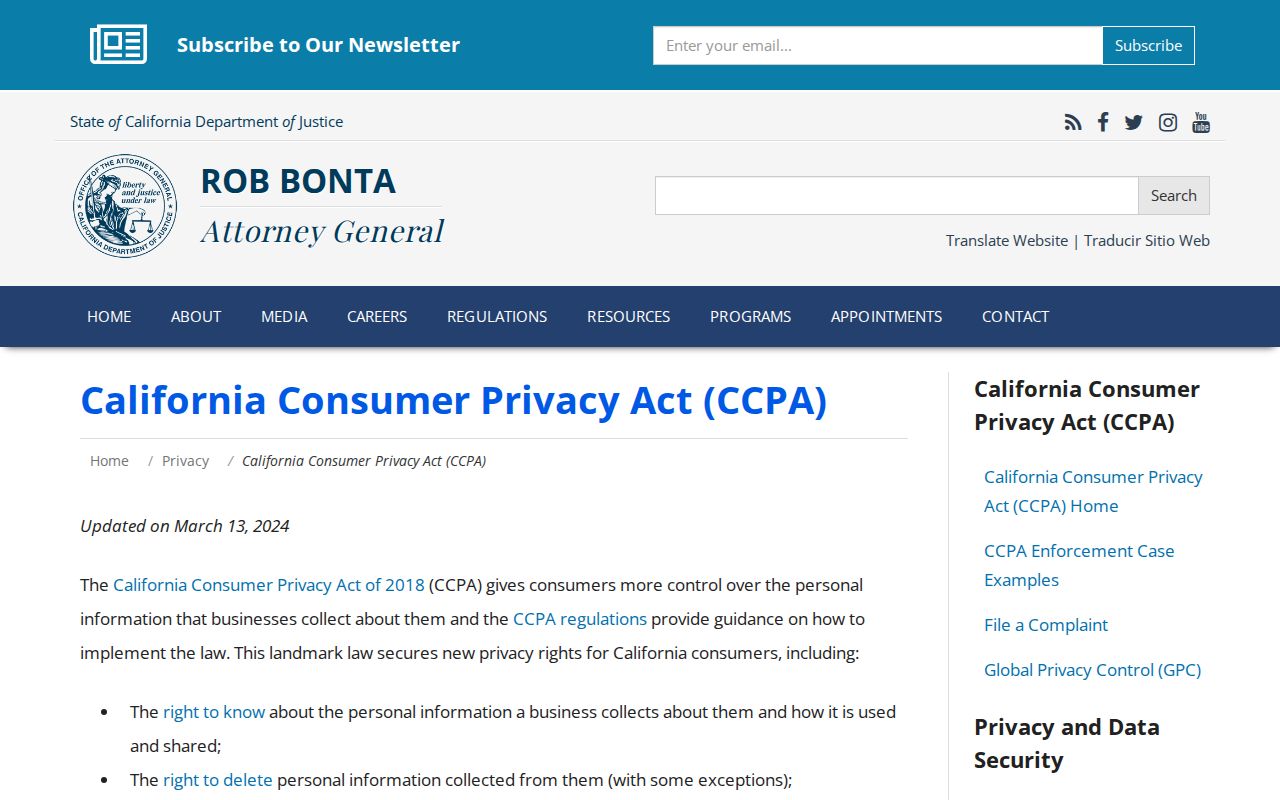
Consumer privacy rights concern data held by a business, while a county custodian controls its own public record and statutory exceptions.
The California Safe at Home program explains the substitute-address and nondisclosure route for qualifying participants.
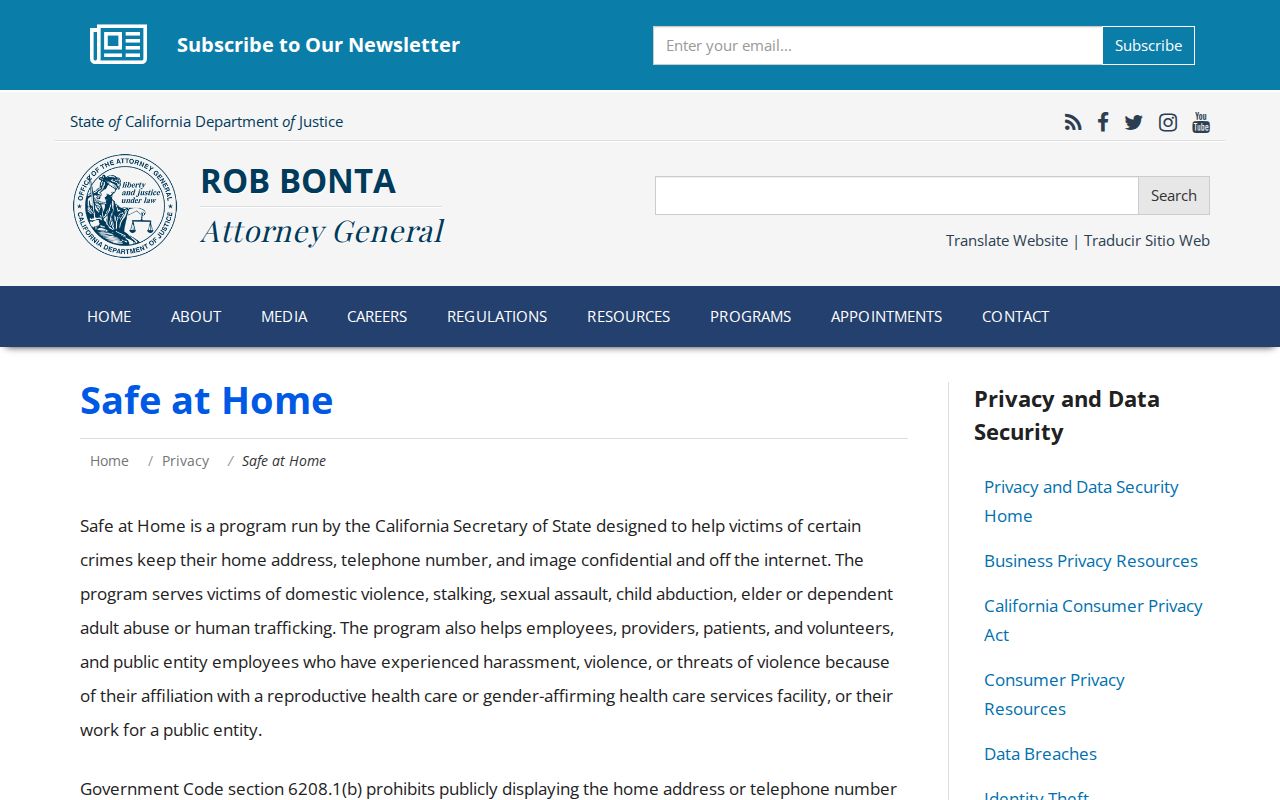
Safe at Home is a confidentiality route, not a public lookup, and protected participants may be absent from ordinary address evidence.
A responsible Lakewood resident lookup records that absence as a lawful limit, not as evidence that a person is absent from the community.
Lakewood Lookup Dead Ends
A resident lookup can end at a lawful boundary. Juvenile dependency or delinquency, adoption, sealed and confidential court files, protected victim data, confidential marriages, original birth records, and Safe at Home addresses may not be available through an ordinary search. California’s DMV data is restricted by the federal Driver’s Privacy Protection Act. Utility and delivery customer lists are not public resident rosters.
Absence is not identity proof. A court case may be sealed later. A voter registration may be confidential or inactive. A directory may omit a person. An assessor record may describe an owner who never occupied the parcel. Keep a dated research log with source type, search terms, and the phrase “not located” when the trail stops.
Lawful personal use. Lakewood public records support family history, civic research, and a person checking their own records. Do not use a lookup to stalk, harass, threaten, impersonate, or harm anyone.
Federal cases belong to the Central District of California and PACER, with sealed filings unavailable. A court counter or clerk can explain custody and copy status, but no clerk can authenticate a private identity by phone.